

Obstructive sleep apnea (OSA) in teenagers is a sleep-related breathing disorder caused by physical airway blockages, often resulting from craniofacial skeletal abnormalities such as a recessed jaw or narrow dental arch. While frequently misdiagnosed as behavioral fatigue or ADHD, adolescent sleep apnea prevents restorative sleep and impairs academic and cognitive performance. Oral and maxillofacial surgeons diagnose and treat the condition through advanced three-dimensional imaging, orthodontic collaboration, and surgical airway expansion such as corrective jaw surgery.
Can Teenagers Suffer from Obstructive Sleep Apnea?
Although obstructive sleep apnea is widely considered a condition that affects middle-aged and older adults, it is a significant medical concern among adolescents. The adolescent body undergoes rapid physiological, hormonal, and skeletal changes that demand between eight and ten hours of high-quality sleep per night. During puberty, biological circadian shifts naturally delay the sleep-wake cycle, prompting teenagers to stay awake later at night and sleep later into the morning. When early academic schedules intersect with this biological delay, adolescents often experience cumulative sleep debt.
However, when a student obtains an adequate duration of time in bed yet suffers from chronic daytime exhaustion, low stamina, or behavioral shifts, the issue is often structural rather than behavioral. Sleep architecture consists of distinct stages, including deep slow-wave sleep and rapid eye movement (REM) sleep. These stages facilitate cellular repair, hormonal regulation, memory consolidation, and neural development. Obstructive sleep apnea repeatedly fragments these cycles, preventing the teenager from ever entering or maintaining the restorative phases of sleep.
What Causes Obstructive Sleep Apnea in Adolescents?
Obstructive sleep apnea occurs when the muscular tissues of the pharynx and soft palate relax excessively during sleep. When this muscle tone diminishes, surrounding soft tissues collapse against the posterior pharyngeal wall, partially or completely occluding the airway. This mechanical blockage impedes normal airflow for intervals ranging from several seconds to more than a minute, triggering a sharp decline in blood oxygen saturation.
In response to hypoxia and rising carbon dioxide levels, the brainstem triggers a micro-arousal, abruptly forcing the body to wake just enough to restore muscular tone in the airway. These micro-arousals are often accompanied by choking, gasping, or snorting sounds. Because this pattern can repeat dozens of times per hour, the adolescent remains trapped in shallow stages of sleep without realizing they are waking up throughout the night.
While enlarged tonsils and adenoids can cause pediatric airway blockages, adolescent airway constriction is frequently driven by underlying craniofacial morphology. Skeletal factors that contribute to obstructive sleep apnea include:
- Mandibular Retrognathia: A recessed or underdeveloped lower jaw positions the base of the tongue too close to the posterior airway space, causing obstruction when lying supine.
- Maxillary Hypoplasia: An underdeveloped or narrow upper jaw restricts the floor of the nasal cavity, reducing total nasal airflow and encouraging chronic mouth breathing.
- Narrow Dental Arches: Constricted arches limit intraoral tongue volume, forcing the tongue backward into the oropharynx during muscular relaxation.
- Soft Tissue Hypertrophy: Residual lymphoid tissue, an elongated soft palate, or an enlarged uvula can physically compound skeletal narrowness.
Clinicians evaluating these factors, such as the surgical team at Oral Surgery Associates, assess the interaction between skeletal architecture and soft-tissue dynamics to develop a definitive diagnosis.
What Are the Key Signs and Symptoms of Teenage Sleep Apnea?
Adult sleep apnea is characteristically identified by loud, disruptive snoring and observed apneas. In teenagers, however, clinical indicators can be subtle, multifaceted, and non-respiratory. Parents, educators, and pediatricians should evaluate both physical manifestations and neuropsychological shifts.
How Do Physical Symptoms Present in Teens?
Physical indicators of sleep-disordered breathing in adolescents extend beyond standard nighttime snoring. Common physiological signs include:
- Chronic Mouth Breathing: Habitual daytime or nighttime mouth breathing points to nasal airway resistance or inadequate transverse maxillary width.
- Morning Headaches: Frequent morning cephalalgia is induced by nocturnal hypercapnia (carbon dioxide retention) and cerebral vasodilation caused by repeated oxygen desaturation.
- Extreme Sleep Inertia: Marked difficulty waking in the morning, accompanied by disorientation and protracted grogginess that does not resolve with caffeine or movement.
- Restless Sleep Patterns: Abnormal sleeping positions, such as sleeping with the neck hyperextended to open the airway, along with tangled bedsheets from frequent tossing and turning.
- Nocturnal Enuresis or Frequent Nocturia: Sleep fragmentation disrupts the normal secretion of antidiuretic hormone (ADH), leading to increased nighttime urine production.
Can Sleep Apnea Cause Behavioral and Academic Issues?
The neurocognitive impact of untreated airway obstruction is profound. While sleep-deprived adults often appear lethargic, sleep-deprived teenagers frequently exhibit paradoxical hyperactivity, emotional dysregulation, and cognitive deficits. Many adolescents are referred for psychiatric evaluations for Attention-Deficit/Hyperactivity Disorder (ADHD), anxiety, or depression when the root cause is structural airway collapse.
Untreated OSA hinders executive functioning, working memory, and impulse control. Consequently, students may demonstrate sudden drops in grades, chronic tardiness, executive dysfunction on complex assignments, and uncharacteristic irritability. Seeking an evaluation from experienced Grand Rapids oral surgeons allows families to determine whether these academic struggles stem from an undiagnosed anatomical airway deficiency.
How Is Airway Obstruction Diagnosed by an Oral Surgeon?
Identifying the anatomical site of obstruction requires sophisticated diagnostic imaging and interdisciplinary collaboration between sleep physicians and maxillofacial specialists. A routine dental or physical checkup cannot fully visualize the internal cross-sectional dimensions of the pharyngeal airway.
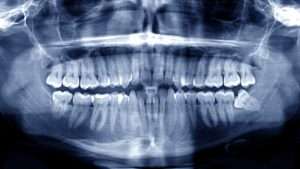
During an evaluation, oral and maxillofacial surgeons utilize advanced three-dimensional Cone Beam Computed Tomography (CBCT). Unlike conventional two-dimensional radiographs, CBCT scans render precise volumetric reconstructions of the patient’s craniofacial skeleton and airway passages. Clinicians can accurately calculate the total airway volume, identify the exact cross-sectional area of greatest constriction (the minimum axial area), and evaluate the skeletal relationships of the maxilla and mandible relative to the cranial base.
When preparing for an airway assessment during an initial first visit, surgeons review the teen’s complete medical history, inspect the oral cavity for soft-tissue crowding or dental malocclusion, and coordinate with sleep laboratories. An overnight polysomnogram (PSG) measures the Apnea-Hypopnea Index (AHI) and oxygen desaturation nadir, confirming the physiological severity of the sleep disorder alongside the anatomical data.
What Surgical Options Exist for Adolescent Sleep Apnea?
While continuous positive airway pressure (CPAP) therapy remains a common medical treatment, adolescent compliance rates with CPAP are notoriously low. Discomfort, social stigma, skin irritation, and lifestyle disruption often cause teenagers to abandon nightly mask wear. When conservative treatments fail or when airway collapse is secondary to skeletal discrepancies, oral and maxillofacial surgery provides durable structural corrections.
When Is Corrective Jaw Surgery (Orthognathic Surgery) Necessary?
For teenagers with retrognathic jaws or midface hypoplasia, orthognathic surgery—specifically Maxillomandibular Advancement (MMA)—is one of the most successful surgical treatments for obstructive sleep apnea. During this procedure, the surgeon makes controlled osteotomies to advance both the upper jaw (maxilla) and lower jaw (mandible) forward, typically between 8 and 12 millimeters.
Advancing the skeletal framework mechanically pulls forward the attached soft tissues, including the tongue base, the soft palate, and the suprahyoid musculature. This expansion permanently increases the physical volume of the retroglossal and retropalatal airway spaces, preventing negative pressure from collapsing the pharyngeal walls during inhalation. Orthognathic surgery is meticulously coordinated with pre- and post-surgical orthodontics to align the dental arches and ensure a stable, functional occlusion.
How Is Patient Comfort and Anesthesia Managed During Surgery?
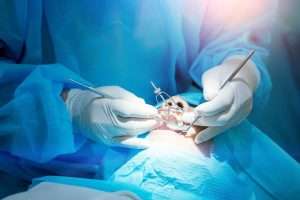
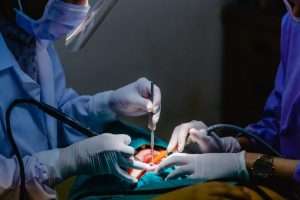
Complex reconstructive jaw procedures are performed in controlled surgical environments where patient safety and pain management are rigorously maintained. Maxillofacial specialists undergo hospital-based surgical residency training alongside medical anesthesiologists. Utilizing modern advanced anesthesia options, surgical teams tailor sedation and general anesthesia protocols to the patient’s unique physiological needs, ensuring stable intraoperative monitoring, controlled hemodynamics, and smooth post-operative emergence.
What Should Patients Expect from Consultation to Recovery?
Undergoing corrective surgical intervention is a structured medical process. Families navigating the path from consultation to recovery work closely with the surgical team at every phase. The process begins with digital treatment planning and virtual surgical simulations that map bone movements to the fraction of a millimeter.
Following corrective jaw procedures, bone consolidation generally requires six to eight weeks, during which dietary adjustments, gentle oral hygiene protocols, and activity modifications are maintained. Swelling and soft-tissue adaptation gradually resolve over several months, resulting in normalized breathing patterns, improved facial symmetry, and resolved daytime sleepiness.
Why Does Surgical Expertise Matter for Teen Airway Reconstruction?
Adolescent craniofacial anatomy presents unique surgical challenges because the facial skeleton is often nearing the completion of its developmental growth. Intervening too early or without adequate skeletal assessment can affect long-term facial development. Therefore, selecting an appropriately credentialed surgeon is vital.
Understanding what to look for in choosing an oral and maxillofacial surgeon involves verifying board certification, hospital privileges, and demonstrated experience in orthognathic and airway reconstruction. A qualified surgeon assesses not only the respiratory dimensions of the airway, but also the long-term stability of the temporomandibular joints (TMJ), dental alignment, and soft-tissue aesthetics.
Families can coordinate with surgical centers by reviewing practical scheduling options to plan procedures around academic breaks, minimizing educational disruption while optimizing recovery time.
How Does Treating Obstructive Sleep Apnea Improve Academic Success and Health?
The academic and physiological dividends of resolving airway obstruction during adolescence are substantial. Restoring normal airflow stops nocturnal desaturations and micro-arousals, allowing the brain to cycle naturally through critical slow-wave and REM sleep phases. During uninterrupted REM sleep, synaptic connections are reorganized and memory consolidation occurs, directly supporting retention of academic material, mathematical reasoning, and linguistic comprehension.
Beyond academic performance, treating adolescent sleep apnea prevents serious systemic health complications. Chronic nocturnal hypoxia activates the sympathetic nervous system, causing nocturnal surges in blood pressure and elevated resting heart rates. Over time, persistent pediatric and teen OSA is linked to pulmonary hypertension, vascular endothelial dysfunction, insulin resistance, and elevated systemic inflammation. Expanding the airway during late adolescence prevents these pediatric airway issues from progressing into chronic adult cardiovascular disorders.
Frequently Asked Questions
Can adolescent sleep apnea be cured without surgery?
Non-surgical treatments, including CPAP therapy, custom oral repositioning appliances, and rapid maxillary expansion (orthodontic widening), can be effective for select patients. However, if airway obstruction is caused by severe skeletal retrognathia or structural craniofacial disharmony, surgical advancement of the jaw bones often provides the only permanent, device-free resolution.
How does corrective jaw surgery treat sleep apnea?
Corrective jaw surgery, or maxillomandibular advancement (MMA), surgically repositions the upper and lower jaws forward. Because the tongue, soft palate, and pharyngeal muscles attach directly to the jaw bones, advancing the skeletal framework pulls these soft tissues forward, significantly widening the pharyngeal airway and preventing nighttime collapse.
Why is teen sleep apnea frequently mistaken for ADHD?
Sleep-deprived adolescents often exhibit symptoms of irritability, impulsivity, poor executive function, and difficulty sustaining attention in school—symptoms that overlap heavily with Attention-Deficit/Hyperactivity Disorder. When airway-related sleep fragmentation is the underlying cause, addressing the anatomical obstruction frequently resolves the cognitive and behavioral symptoms.
What is the recovery time for orthognathic surgery in teenagers?
Most adolescents recover sufficiently to return to school or light activities within two to three weeks post-surgery. Initial bone healing requires approximately six to eight weeks, during which patients follow a modified soft-food diet. Full bone remodeling and complete tissue healing typically take several months to a year.
At what age can an adolescent undergo corrective jaw surgery for airway issues?
Orthognathic surgery for sleep apnea is generally performed once facial skeletal growth is complete or near completion, which typically occurs between ages 16 and 18 for females and ages 17 and 20 for males. Serial cephalometric radiographs or hand-wrist scans are often used to confirm that active growth has concluded prior to surgery.